Monday, October 11, 2010

Frankfurt Book Fair: The last day...

drained of most of its authors, booksellers, even perhaps public visitors is the Frankfurt Book Festival on its last day. It is, therefore, a bargain-hunter's wet dream, should that bargain-hunter be seeking to carry more weighty fiction items home with her than she arrived with!!!

My exciting finds include:
from Coffee House Press http://www.coffeehousepress.org/:
Laird Hunt's Ray of the Star,
Aaron Michael Morales' Drowning Tuscon,
&
Karen Tei Yamishita's I Hotel --a 613 page tomb! (click the title not only to be linked to the book at coffee house, but also to read an interview with the author, Yamishita!)
from the Random House and Vintage massive stand, which was selling off all their displays, I got half-off copies of
The Ministry of Special Cases a novel by Nathan Englander,
Unaccustomed Earth stories by Jhumpa Lahiri,
Haruki Murakami's Norwegian Wood
&
Summertime by J.M. Coetzee
I also picked up an exciting novel with fun visuals in the margins, linked to the character who is a map-maker: The Selected Works of T.S. Spivet by Reif Larsen--a book which was shortlisted for the Guardian's First Book Award.
I was also given a Japanese translation into French by the fabulous Japanese Literature Publishing Project (JLPP: http://www.jlpp.go.jp/): Ryûnosuke Akutagawa's Une Vague Inquiétude, by the publisher éditions du Rocher
Lastly, for the everlasting Buffy fan in me, I found Dark Horse comics, as well as their distributor, and between them and Amal's astounding bargaining I ended up with Buffy, Season 8 by Joss Whedon (a comic book series) in its entirety for a great price!

So, how did this little book-purchasing adventure come to be?
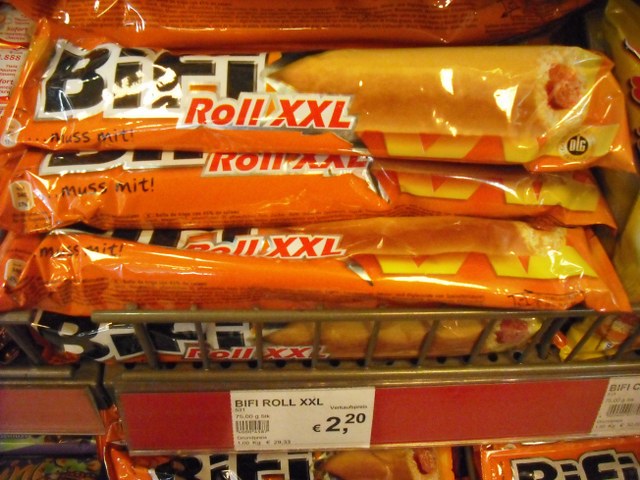
Amal--the owner of The Book Corner, Mulhouse's finest English bookshop (http://www.the-book-corner.fr/) which also carries a wide selection of French reads, asked me whether I wanted to go to Frankfurt with her for the festival. We both agreed to get up at an unholy hour on a Sunday to head off around 6am for Frankfurt--approximately a 3 hour drive from here. Before heading out of town in her green car, we stopped off at an open bakery and got rasberry and also cinamon croissants. Then we turned out of town into a dark and misty morning, half-awake and dreaming of the startrek-era teleportation machines we so wish existed! In fact, no, the road trip was half the fun--and half the day, too!!!! We had an excellent time with chattering along nonstop (mostly me, trying to keep me, or both of us, awake!) One of the things en route that I thought funny were the truck stop treats. Yes, if you are feeling a hankering for hotdogs, the pit stops can offer you both pickeled in a jar versions or else the XXL roll option--which is what we Americans call pigs in a blanket!
Once we arrived, we were shuttled over into a dauntingly large open glassed space where we consulted our maps of the many interlinked buildings and floors of buildings (see photo of Amel at the left with her map). We started off where all the American publishers were, which meant that I bought tons of books then came to a point just after lunch where I thought "I can go no further": and confided my treasures to a cloak-room while I perused the rest of the fair as a spectator--not buying anything new, at times because I could not read the many languages the books were written in, at times because the gorgeous antiques books were WAY outta my price range. But the most fabulous thing was to be accidently stumbled across in the antique book tent: The 19th Century Rare Book Shop, from MD. There, in their glass cabinet, sat a gorgeous first edition of Ulysses, with its green cover and its nubby never to be cut open pages, on sale for around 17000e. And on the shelf above this first edition by James Joyce sat another stunning first edition--Edgar Allen Poe's The Raven, in a mini hardbound edition--simply precious!!!!
In fact, as we moved deeper into the heart of the festival, which is in buildings surrounding a sort of square where people sat in lines along a fountain taking in a little fresh air or listening to readings or having a snack, the population seemed to be growing. By mid-afternoon we had reached the German only section, where masses still milled up and down the festival hall allées, buying or consulting books, publishers, e-tools, or meeting with potential agents for their books. Some people--like me--looked ready to crash, others actually napped in corners on couches, and a "militia massage" group was giving out free chair massages (the line was, alas, too long for that). Exhausted and worded out, Amal and I decided it was time to go hit the road of return to France. I collected up my books and we hit the buses then the road, with only one tiny loop-de-loop to get correctly onto the autoroute towards Mulhouse. By 10pm, we were back from our day out, and ready to drop into bed--with a good book!

Wednesday, September 22, 2010

Radical Poets who Publish questionnaire: please send your answers!

For my article “Visible Invisibilities : Radical Poets who Publish” for the October conference Poètes et éditeurs : comment diffuser la poésie d'avant-garde ? (1945-2010) in Le Mans, France, I seeking any responses by “avant-garde/experiemental poets” and poet-publishers to a few questions about your writing, publishing and distribution issues and perceptions regarding the distribution and availability of avant-garde poetry (your own and that of others) since 1945. I appreciate any time you may give to me for this short form interview. If you do not have time for all of the questions, feel free to just answer a few!!! THANK YOU! Jennifer K Dick Please send your responses to fragment78 at gmail.com or fragment3 at yahoo.com with “questionnaire response” in the subject heading! If you would prefer to receive this in a word doc, email me for the survey and I will send one by WORD to you! (Vous pouvez répondre à ces questionnaires en anglais ou en français!)

POETS QUESTIONNAIRE
(This set of questions is for non-publishers, if you are both a poet and a small press book publisher see questionnaire 2 below. Thanks!):

Your name : _____________________________
Author of approx. how many book-length works (48+ pages): ________
How many of these books are with small presses? __________________
How many are with major presses, or have been republished with large presses? _________
Are you also the author of artbooks or any collaborative books? ____Yes ____No
Year your first book was published, and name of the press? _________________________
_________________________________________________________________________
Is your first book still in print? _________ If so, is that a reprint with another press? _______
Which? ____________________________________________________________________
Have any of your books been translated? ____ Yes ____ No. If Yes, into what languages? _______________________________________________
Have any of your books been awarded major prizes? Which prize(s)?__________________
_________________________________________________________________________

1) If you have the option to have your next book come out with a small press, a major/ mainstream press, an electronic book only press or an art format press, which would you choose and why?

2) What has been the greatest obstacle to the diffusion of the works you have written? (ie: Money? Readership? Marketing? Publicity? Not being taught at University? General disinterest by your press in getting the works into the world? etc )

3) Do you try and promote your books, or are those books primarily distributed among a close circle of friends or by the press? Why/How?

4) Do you feel that the avant-garde is being further marginalized by limited access to mainstream, recognized works, (those found in Borders/Amazon/Barnes & Noble, for example), or are spd and online formats opening visibilities for more non-mainstream authors?

5) The majority of “avant-garde”, experimental/postmodern works are published at small presses. Does this decrease their recognition in national and international prizes? How does this have an effect on you as an author? Can something be done to rectify this, and if so, what might that be?

6) Are you or have you ever been part of a collective? A movement?
If so, which? (and, if pertinent, when?)
If so: Did or does this help you and your work get greater readership, diffusion, distribution? What were the greatest benefits of being part of this collective/movement?

7) Today publishers and authors continue to talk about their fears regarding the “end of the book”, and thus the complete monopolization of electronic formats for books, publishers, etc. Do you have an eBook in print, and if so, what do you perceive as the benefits for your readers and for you of this format? Are there any disadvantages you would note?

8) When we talk about diffusion, publication, etc, we are also often talking about readership. Could you comment on some of the questions or topics here regarding your own reading habits, purchasing of books, the availability of avant-garde works from the past as well as the present: (For example, do you feel that you as a reader read widely? Do you read exclusively contemporary “avant-garde” or more non-traditional works? Do you buy books or do your prefer to read online?

9) Do you financially donate to any small presses or magazines, and if so, what motivates you to select one press over another (the authors it publishes, that it is run by a friend, that is it local, that it distributes well or needs funds for greater visibility…? etc)

10) From your viewpoint, have small press publishing practices created not only domestic webs of contacts in the USA, thus co-publishing opportunities and readership, but even international ones? How has this been experienced by you, (if you have experienced this)?

* + * + * +

POETS WHO ARE ALSO BOOK PUBLISHERS QUESTIONNAIRE:

Your name : _____________________________
Author of approx. how many book-length works (48+ pages): ________
Are you also the author of artbooks or any collaborative books? ____Yes ____No
Year your first book was published, and name of the press? _________________________
_________________________________________________________________________

Is your first book still in print? _________ If so, is that a reprint with another press? _______
Which? ____________________________________________________________________

What press(es) do you run (or ran—if now defunct presses, please include start and end dates):
___________________________________________________________________________
Websites/blogs for your press(es):_________________________________________________

On average, how many full length books of poetry/hybrid work does your press publish per year?
____________ What is your general print run per book? ___________________
What is the average price of a book you publish (or price range of books): ______________

Does your book press have a print magazine as well? ____Yes ____No
An online magazine? ____Yes ____No
A chapbook series or artbook series? ____Yes ____No
Does your press publish translations? If so, what percentage of the book run is translation?

1) What motivated you to decide to create your press, or join your press collective?

2) What is the greatest obstacle to the diffusion of the works you publish that you feel your press faces? (ie: Money? Readership? Marketing? Publicity? Not being taught at University?)

3) Do you try and promote the books you publish, or are those books primarily distributed among a close circle of friends or by the authors themselves?

4) Do you feel that the avant-garde is being further marginalized by limited access to mainstream, recognized works, (those found in Borders/Amazon/Barnes & Noble, for example), or are spd and online formats opening visibilities for more non-mainstream authors ?

5) The majority of “avant-garde”, experimental, postmodern works are still published at small presses. Does this decrease their recognition in national and international prizes? How does this have an effect on you as both author and publisher? Can something be done to rectify this, and if so, what?

6) Are you or have you ever been part of a collective? A movement?
If so, which? (and, if pertinent, when?)
If so: Did or does this help you and your work get greater readership, diffusion, distribution? What were the greatest benefits of being part of this collective/movement?

7) Today publishers and authors continue to talk about their fears regarding the “end of the book”, and thus the complete monopolization of electronic formats for books, publishers, etc. Are you an eBook publisher, and if so, what do you perceive as the benefits for your readers and authors of this format? Are there any disadvantages you would note?

8) As an author: Are any of your books in eBook format? If so, what are the benefits and the disadvantages of this format as you have experienced it?

9) When we talk about diffusion, publication, etc, we are also often talking about readership. Could you comment on some of the questions or topics here regarding your own reading habits, purchasing of books, the availability of avant-garde works from the past as well as the present: (For example, do you feel that you as a reader read widely? Do you read exclusively contemporary “avant-garde” or more non-traditional works? Do you buy books or do your prefer to read online? Do you financially donate to any small presses or magazines, and if so, what motivates you to select one press over another (the authors it publishes, that it is run by a friend, that is it local, etc)

10) From your viewpoint, have small press publishing practices created not only domestic webs of contacts in the USA, thus co-publishing opportunities and readership, but even international ones?

Sunday, September 12, 2010

Thanks Ron...

I must say, being cut off from all things internet and phone here in the land of Alsace is hard. But when I got online today in this little hole-in-the-wall web booth space I was delighted to have received a few messages regarding Ron Silliman's blog posting on Sept 11th of the interview I did with Cole Swensen a few years back about her work. If you have not had the pleasure of all the other fab postings at Silliman's blog of late--Olson reading, etc--go now! And if you have not seen the cole & I vid from The Continental Review (an online poetics video review), it is here too: http://ronsilliman.blogspot.com

Thursday, August 26, 2010

Mulhouse... yes, going there

It is the final few days and of course I am on the computer instead of out running the million errands left or seeing a museum in a fit of "oh my goodness, I won't be able to come here for awhile"! I realized at the gorgeous William Kentridge show ("cinq thèmes) now on at the Jeu de Paume (yes GO see it) yesterday that I have hardly the energy to concentrate on such things, as I do feel already propelled "southeasterly" as George Vance said in his rewords poem yesterday. So where am I heading? What is Mulhouse? This blog will certainly be looking at that and exploring the newness of Alsace this fall. But, like me who has had a few nibbles of the town to come, here are a few pictures of the Alsacian town of Mulhouse to wet your appetite--and lure you there? Opportunities to read abound, so come visit!

The Mulhouse train station: Port of entry!!!: This is right by the canal. Mulhouse in fact has a lot of waterways running through it, and is also known for its clear, clean, springwater--so no buying of bottled water here!!!


The greeny slopes the are the end of France and the beginning of Switzerland to one side and to Germany on another. This is about 5 minutes out of town, and thus about 10 minutes in a car from where I will be living in the center of town! The start of the Black Forest is here (pictured at the left of this first photo)!

Oh, and note the buildings on the far side of these later 2 photos below? Yes: Basel, Switzerland! (Bâle)


Yep, a Cathedral. Every French city has one, and I look forward to visiting! This is also just round the corner from me! It sits on a wide pedestrian square, with some of the other well-known colorful buildings bordering it (like this pink one), as well as some cafés and bookstore, too.:

Les Vosges, near Mulhouse. This is a photo taken from the train as we head past Colmar and to Strasbourg. I always feel like I am going South on that train, but in fact it is heading North! You can see some of the Alsatian vinyard--in a blur--as we rush past here. And villages tucked into valleys at the base of some of les vosges!


The colorful buildings in the touristy center of the city certainly will be a bright beacon on those cold winter days! This is just around the corner from my new home: which is itself a large, reddish building from the 1800s!
Yes, cafés. They have them everywhere in this country, I am pleased to see. And I am excited to get to lounge on some terrasses this fall and write letters and journal, and poems and stories. I will write anyone that writes to me a postcard a letter! So email me for my new address and then send on a card (to make me less lonely and to decorate my new home even?) and I will send a letter back with some image of Mulhousain life! Promis!


This said, one of the main differences between Mulhouse and Paris will be my ability to actually walk down a street. Isn't this kind of appealing? So few pedestrians--noontime on a springy day in Mulhouse! :


Tuesday, August 17, 2010

Farewell Paris - Bonjour Mulhouse Soirée de rentrée-départ

PARIS : Coming or Going? : SOIREE de RENTREE/DEPART
Hey friends! -- Whether you are coming back, or heading off (as I am) I hope that you can stop by for a drink with friends to say Bonjour-Au Revoir! The 28th August, from 8pm at BUBAR
3 r de Tournelles, PARIS 4e
(version française:)
Paris: coming or going?
SOIREE de RENTREE/DEPART
le 28 août 2010
à partir de 20h !
au: BUBAR
3, Rue des Tournelles
75004 Paris
M° Bastille

http://www.cityvox.fr/bars-et-boites_paris/bubar_84018/ProfilLieu

Wednesday, July 28, 2010

Ekleksographia: The FRENCH issue is UP ONLINE

Back from London (photos en route, promised) to the fabulous news that the issue that has been awaiting its appearance since last winter has made it out of the static ether online in all of its loveliness. Kudos to Alex Dickow for his fabulous work both as guest editor and on the web layouts (and this lovely photo at the left which you can see again online at the magazine). I al personally thrilled to have poems, translations and a short critical review up there. Enjoy!http://ekleksographia.ahadadabooks.com/france/index.html

Official press release:

Friends, Strangers and Fellow Poets,
Ahadada Books' online journal
presents
Wave Three: The France Issue
in memory of Raymond Federman
& guest edited by Alexander Dickow


featuring original work and translations by the editor and by

Barbara Beck, Philippe Beck, Audrey van de Sandt, Alexis Tchoudnowsky, David Christoffel, Alessandro De Francesco, Noura Wedell, Jennifer K. Dick, Henri Droguet, Raymond Federman, Pierre Le Pillouër, Bruno Fern, Frédéric Forte, Michelle Noteboom, Albane Gellé, Liliane Giraudon, Mark Weiss, Amy Hollowell, Pierre Joris, Margaret Konkol, Nicholas Manning, Elisa McCool, Maria Rusanda Muresan, Jean-Claude Pinson, Leemore Malka, Jody Pou, Christian Prigent, Rufo Quintavalle, Joe Ross, James Sacré, David Ball, Alexandra Sashe, Eric Suchère, Carrie Noland, George Vance, Chet Wiener and Geneva Chao,

And featuring these reviews:
Adam Biles reviews Napoleon's Travelling Bookshelf by Sarah Hesketh
Margaret Konkol reviews WIW?3: Hold me tight. Make me happy by C. J. Martin

With Thanks to Daniel Sendecki and Robert Dickow for their technical assistance.

Thank you for reading, and for helping us spread the news!

Monday, July 19, 2010

Leighton House Museum "Flaming July" Reading & Events!

PRESS RELEASE:
Flaming July

London OPENING
23 July 2010: 6pm to 9pm
Show continues 24 July 2010 to 15 August 2010

I am thrilled to be setting off to the ol' UK again--London. Once a city I thought of as a Bermuda triangle for travellers (I was usually heading north to UEA in Norwich and London always felt like a tangled mess to get through from Plane to train), is now such a pleasure to visit. And to be invited to read works I wrote specifically for the reopening of Leighton House Museum and for/after a series of artworks produced for the Friday night, 23 of July opening is even more of a plus! I hope, therefore, that you will join me for this event and to discover the exciting works that have been produced for FLAMING JULY by other authors, performers and visual artists at the invitation of co-organizers Liane Lang and Brooke Lynn McGowan. (You can also invite people via our facebook event page, just click fep)
AT:
Leighton House Museum, Kensington,
12 Holland Park Road, London,

Tube: High Street Kensington, Olympia or Holland Park
Buses: 9, 10, 27, 28, 49, 328


Private view and opening Friday 23 July 2010, 6pm to 9pm for an exhibition curated by Brooke Lynn McGowan and Liane Lang, part of the Cultural Olympiad Project Once Upon a Time in the West, supported by the Borough of Kensington and Chelsea. With readings, performances and presentation of works by:

Alice Anderson
Paul Buck
Ana Čavić
Justin Coombes
Jennifer K Dick
Hilary Koob-Sassen
Anouchka Grose
Nick Hornby
Liane Lang
Annabelle Moreau
Kate Williams
Julian Wild


BACKGROUND of the EVENT & its title:

In 1962 a painting was discovered by builders behind a false wall in a house on Clapham Common, London. They took it to a local picture framer, Ingo Finke, who realised what it was and agreed to handle it for them. An opportunity was missed when, aged fourteen but already a passionate devotee of Victorian art, Andrew Lloyd Webber spotted the picture in what must have been Finke’s shop window, but could not afford it. The painting was Flaming June, painted in 1895 and acclaimed, and instantly sold, at the Royal Academy Summer Exhibition that year. In 1915 it was placed on loan at the Ashmolean Museum, Oxford, where it remained a popular exhibit until 1930 when it was returned and subsequently disappeared.[1]

From June to July: in reference to this work and in response to the oeuvre and life of Frederic Leighton, Brooke Lynn McGowan and Liane Lang are proud to present Flaming July, an exhibition of contemporary art, writing, and performance. Flaming July is part of Once Upon a Time In The West, and part of West London’s contribution to the Cultural Olympiad. The project takes as its point of departure the rich history of artist studios in West London and examines it through the eyes of contemporary artists and writers. This exhibition of entirely new and site specific works responds to the legacy of Leighton, his house, and artist studios in West London.

The title is of course a tribute to the artist’s opus. However, it is more than that. Flaming July refers not only to the painting itself, and recalls not only the month in which the Cultural Olympiad weekend is held, but also a more nefarious and questionable legacy. Indeed, if the aim of Once Upon a Time in the West has been to investigate the ‘story’ and ‘history’ of studio, space, and artistic practice in West London, then the aim of Flaming July, through a series of site specific works, is to consider the subliminal, suppressed, and often Orientalist legacy of Leighton in light of a greater, more conflicted, and more international London.

Every archive incites the urge to burn.

Live performance on the night include Jennifer K Dick reading texts relating to Leighton House and the work of the artists in the exhibition, a performance by Ana Cavic, a reading by Paul Buck of Armpit, a fictional monologue and by Kate Williams of her short story Psyche.

Artists/Writers/Performers bios/info:

“The drape exceeds its role as a prop or cover and becomes, in Leighton’s painting, a sculptural, subjective, and active agent”, Liane Lang comments. Her animated video work Material Displeasure was made over several weeks in the rooms of Leighton House. It manifests an abstracted spatial orientation and connotes hallowed and ghostly hauntings. Space and time collapse and repeat as a wandering—a flaming orange, blood red and translucent white ream of fabric—form undoes its own formal qualities. The work revels in colour, taking in subtle changes of light over many hours of the day, observing a sunbeam on a painting or the shadow of a chair. These meditative moments are interspersed with objects lent hyperanimacy, developing a narrative relation between the material object and its ambiguous history.

Sculptor Nick Hornby has produced a new life size tribrid: by dissecting two of Leighton’s gestural sculptures with a fragment of wallpaper from the dining room. Blown up to six feet, the wallpaper graphic cuts out an elegant aeronautical sweep, and the two figures balance teetering on their combined foot. He says: “Leighton amassed fragments, vignettes, colours, as he circumnavigated the a world of Art, history, taste, and society. His studio was a reflection of his taste, and a projection of how he wished to be perceived.” Hornby collects three motifs from Leighton house and evenly distributes them around 360.º The pieces trisect one another carving out a new synthetic, an admixture. Like other work, this piece is a puzzle to be unfolded.

For Alice Anderson, alienation exists at the base of being. Anderson’s work speaks in semi auto-biographical tones of the place that the other takes in the understanding of self. Alice Anderson has produced a new two-minute video work at Leighton House for Flaming July, Butterfly Ritual, from the series of performances Childhood Rituals. Anderson re- interprets gestures and actions from early childhood using ginger thread or ginger dolls’ hair. She made use of the Arab Hall, which conjured strong personal memories of her Algerian born mother who had an Arab balcony in the house. Alice Anderson uses her North African cultural background to create sculptures, films and performances exploring fictional childhood memories’.

From west to east: the famed Arab Hall in the home of the late Lord Leighton stands as a testament to the displaced and projected fantasies of Victorian England, whose own bounded spaces were as prey to the sensual improprieties of power--from sex to money and beyond—as any imagined by this generation in the near or far East.


Justin Coombes’ art evokes strange, unstable relationships between personal memory, historical memory and landscape. For Flaming July he has produced Saint Elsewhere, a piece comprising of a photograph and a fictional letter written by the character in the image: a gay journalist. The piece was inspired by speculation that Leighton was homosexual and asks whether repression, for example the socio-sexual constraints of Victorian society, might be both a hindrance upon, and a fantastic spur to, creative endeavour.

The writer and historian Kate Williams is the author of England’s Mistress, The Life of Emma Hamilton and The Young Victoria. Kate has produced a short story especially for Once Upon a Time in The West. Psyche is the fictionalized tale of Ada Pullen, Leighton’s model and later a celebrated actress. Kate will be reading from the story in Leighton’s studio.

From Psyche’s phantasies to her axil, Paul Buck has created a new work for Flaming July titled Armpit. Armpit is a way to focus on the relationship of the model posing with arm aloft before the artist in the studio, brush in hand. The darkness that lurks beneath that image often spills into sexual encounters. The Armpit presented here takes the form of an artwork (painting/text/photo) and a performance of the text that paints.

With a close attention to the dynamics of space as an expression of power and privilege, Annabelle Moreau has created Infinite Lighting in reference to the glorious north facing studios in historic artists houses. The surface of the piece is engraved by a multitude of fine lines converging into vanishing points. Light changes as it is caught by the grooves of the metal, creating an ever-changing environment, emanating and ephemeral. The vision evades into the infinity depicted. The piece stands as a window echoing the North light so sought by artists.

With a poetic take on the thin line between fact and fiction Ana Čavić’s performances and text pieces thrive on the non-linear world of magic realism. Inspired by myths surrounding Leighton’s models, Climbing the Walls (Dream Walking) is the latest in a series of site specific ephemeral performances that focus on subtle and fleeting interventions in found spaces. Instead of climbing around interior spaces without setting foot on the floor on this occasion the artist will focus on the floors themselves, making her dreamlike way around Leighton House’s creaky floorboards and ageing stairs without making a sound or leaving a trace whilst holding the audience absolutely captive.

"If you desire to see a Japanese effect, you will not behave like a tourist and go to Tokio. On the contrary, you will stay at home." (Oscar Wilde The Decay of Lying) For Flaming July Julian Wild has created a work constructed from Japanned hardwood. Japanning is a process that was developed in Britain in the 18th and19th centuries to emulate Japanese and Chinese lacquer work. Japanning is representative of the appropriation of Eastern aesthetics and artifacts used within the fabric of Leighton House. “The title of the piece Indeterminate System comes from my approach of having no predetermined notion of the shape of the sculpture before I started to make it. This work is about a fine surface finish being applied to an awkward object. In mathematics an indeterminate system is a system without a solution.”

Recent graduate and emerging talent Annabel Wightman presents Evasion whose theme of the illusory nature of time represents the fleeting nature of our ‘grasp’, on both intimacy and being, with long redolent light bulbs suspended over a series of waxen clasped hands. A poetic comment on the condition of hubris involved in the life of the house itself, the artist comments that “The work strives towards a supplicatory mood.”

From opening a window to going out of doors: Anouchka Grose has produced a cd single featuring two pop songs, each composed in relation to the legacy of Isadora Duncan, studio space and the artist’s own ambiguous relationship to Kensington, where she grew up. The first song, I Want to Dance All Over Your Face, was written in Kensington Square in 1987. The second, I Invented You, was written in 2010 and takes its title from a line in Isadora Duncan’s autobiography. Isadora Duncan used the communal garden in Kensington Square as an unofficial studio while she lived there — in a cramped, furnished house — in 1899. She was first discovered by a well-known actress, while dancing on the lawn. The music is a tribute to the artists resourceful use of space.

The poet and critic of visual poetics, Jennifer K Dick, author of Fluorescence, Retina/Rétine and Enclosures, has produced works after the visual artists’ contributions to the Flaming July project. In the texts she will read, space and time, pasts and presence are skewed and fragmented. Language becomes a tool for touching, glancing at, moving towards or hiding from the sieve of time, the Leighton House then and now, the art produced in the 21st century placed in a space that lingers in other, lost centuries.

Further information:
This site-specific exhibition will be presented at the home of Frederic Leighton in Kensington until mid August. Open 6 days a week (closed on Tuesday), 10.00-17.00.

Brooke Lynn McGowan and Liane Lang are leading two walks as part of Once Upon A Time in The West on 24./25. and 31 July and 1 August. Titled A Model Village and Madness in Grey the walks take a group of visitors to many historic artist studio buildings in West London. Please visit http://www.rbkc.gov.uk/ for details or see the ad on IN TRANSIT (click link for site).

Liane Lang is the lead artist for Once Upon a Time in The West. The project curator is lecturer and art historian Brooke Lynn McGowan.

Brooke Lynn McGowan is an academic, curator, and writer. Brooke was born and raised in California and educated at Cambridge University, England as well École des Hautes Études en Sciences Sociales in Paris. In addition to completing her PhD in Modern Languages, art history and contemporary aesthetics, she has worked with the Barbican Art Gallery (London), the Louise T Blouin Insitute (London), Reconstruction Arts (England) DOX Center for Contemporary Art (Prague), as well as countless other galleries and institutes in the US, UK, Europe, and Asia. Her writing includes poetry, prose, essays, critique and journalism. She lives and works in the UK.

Liane Lang grew up in Germany and the US. She studied at NCAD in Dublin and completed a BA at Goldsmiths College followed by a Postgraduate Diploma at the Royal Academy, where she graduated in 2006. Her work is concerned with notions of animacy, which she investigates in photography and video works. Many of Lang’s works examine museum objects, modes of display and the verisimilitude of art objects. She lives and works in the UK.

The project is supported by the Borough Of Kensington and Chelsea for the Cultural Olympiad.
[1] Many Thanks to Simon Wilson for making available his research.

Friday, June 25, 2010

Three of my favorite Paris haunts...

There is nothing like pre-move nostalgia on a sunny summer's day to make you admire the errands you run in a city you will soon be living without. Paris has been my home for over a dozen years now. I know its streets like every meandering poet type. I have walked and run and slipped on these roads in every season, every mood: from the blues on days when I have been jobless and overworked, to the headachy blindness not seeing a thing on days when I was too caught up to notice the city, to days when I seemed to notice every stone's nook and cranny, as in love with the turns and twists and changes of Paris as with my own maturing. But today was that lovely mix of running the everyday errands, getting things done, and reveling in the hereness of here. For my errands involved stopping by some of my favorite haunts, haunts--Places which I thought everyone should really know about! (And I don't just mean walking over the river looking at le Pont Neuf--as in my picture, top right--though that is great, too!)

Nothing is like waking up early and pouring the last coffee into the filter, not really having enough. It can make you grouchy. Or me grouchy. But instead I got all happy: I'd decided to stop in at Cafés Amazone. Situated in the marais not far from the Pompidou Center and across from Space Hair's dance grooves pounding on the pavement, Cafés Amazone is a sleepy caffinator's dream. Almost unremarkable, it is situated at 11 rue Rambuteau, 75004 Paris, M° Rambuteau, which is also a comfortable stroll length from Les Halles (exit towards Pompidou) or Hotel de Ville (photo at left from evous, click store name above for link). One can easily fly past and not notice this hole-in-the-wall. Cafés Amazone is half filled up by a giant coffee roaster, the other half with an L-shaped counter behind which rows of coffees and teas, plus some honeys and other local products rest on shelves. The shop boasts one table for anyone who wants to have a euro coffee in house but not standing up. For the great price of between 3e50 and 5e90 per 250g (depending on rarity and styles of café) the range of grain coffee which can be ground to perfection by the owner for filter, espresso machine, Italian cafetière, etc is delightful. An added bonus is that there is always a coffee of the month--this month is is called "China" and is a coffee with a delectable chocolaty finish. My favorite? The "gourmet blend". I also am a fan of the Ethyopian Moka that the charming, aimable owner always carries. But if you like a darker, more acidic finish to your morning jolt, try the Guatamalan or the "dark roast". This is a place to not miss if you are looking for excellent coffee for the house, or as a gift. I can't stand to get my coffee anywhere else since discovering it!!! Open Tues-Saturday, til 7pm. Often closed all of August for the holidays, so don't wait!

A second, perhaps more cliché fave of mine is the old Bon Marché. (http://www.lebonmarche.com/) I adore admiring all the overpriced, colorful goods in there (the name is an oxymoron for the store). The exotic foods, the pastas that look like they should be framed instead of being consumed, and at Christmas the extravagant window and light displays, with mechanical objects delighting passing children (or adults like me!). As I mill about on the upper floors, I think of Anaïs Nin journalling in there--writing stories on couches between lavish clothing options. She really did this, you know. But there are some deals no one ever tells you about to be found at le Bon Marché (M° Sèvres-Babylone). Lunch, for one. There, among the pricy deli options, is a glass counter area shared with numerous deli options. One which includes the Chinese traiteur stuff also currently has next to the Chinese offerengs a place for sandwiches made to order (though it does move sometimes, so watch for it) There is no billboard, and it is hard to spot, probably because it is such a deal. Sandwiches on command! And on these huge rectangular slabs of pain poilane-ish bread. They have every veggie it seems--carrot, tomato, lettuce, olives, broccoli, eggplant, pepper, mushrooms, chives, basil, etc. They allow you to chose a base--chicken, ham, salmon or if you want to just stick with none. Then you can have cheese or no cheese and then all the veggies you want plus either tzatziki sauce or eggplant spread or 2 other spreads I have yet to try. The sandwich is ENORMOUS, so bring a friend. It goes for a little less than 5 euros, but as I said, it is really two sandwiches, and they cut it in two.

If you are not wanting a sandwish or are doing that Atkins no bread thing, then go for the Bon Marché Chinese traitor skewers: Chicken rolled in lemongrass. One is enough--trust me! And it goes fro 3euros20. They will heat it (after you pay for it), and there is a park nearby where you can eat in the sun on days like today. So... there is a little bon marché to be found at le Bon Marché! And if you feel like splurging, the delights certainly await!

After you have run round the posher and populated areas of Paris, you might be wanting a little less of all that. Next to Nation metro stop on the corner of rue des immeubles industrielles and 307 rue du faubourg st antoine, 75011 (M° Nation or bus 86) is a café we like to call the XO--but which is literally the Extra Old. A popular apéro joint, you can enjoy conversation on the terrasse with a démi beer on tap for 2euros90. Want to stay for dinner? I totally recommend it! Your general, but good, brasserie faire is to be found, but in a cooler, hipper, neighborhoodly ambiance of this bar rather than the overneon of the bigger brasseries found along the place de la bastille--The XO is nicely lit, with a fabulous big zinc counter. It's also a place where people of all ages gather. In winter, it is an excellent place for hot chocolate or café crème tucked in with a good book along the heater, but right now, with our summery end-of-June weather, it is better to be out on the street watching passersby as you get some sun (and a nice breeze, too, if you are lucky!)

OK, so... those are a few of my faves. Hope you enjoy them for me while I am away in Alsace!!!!